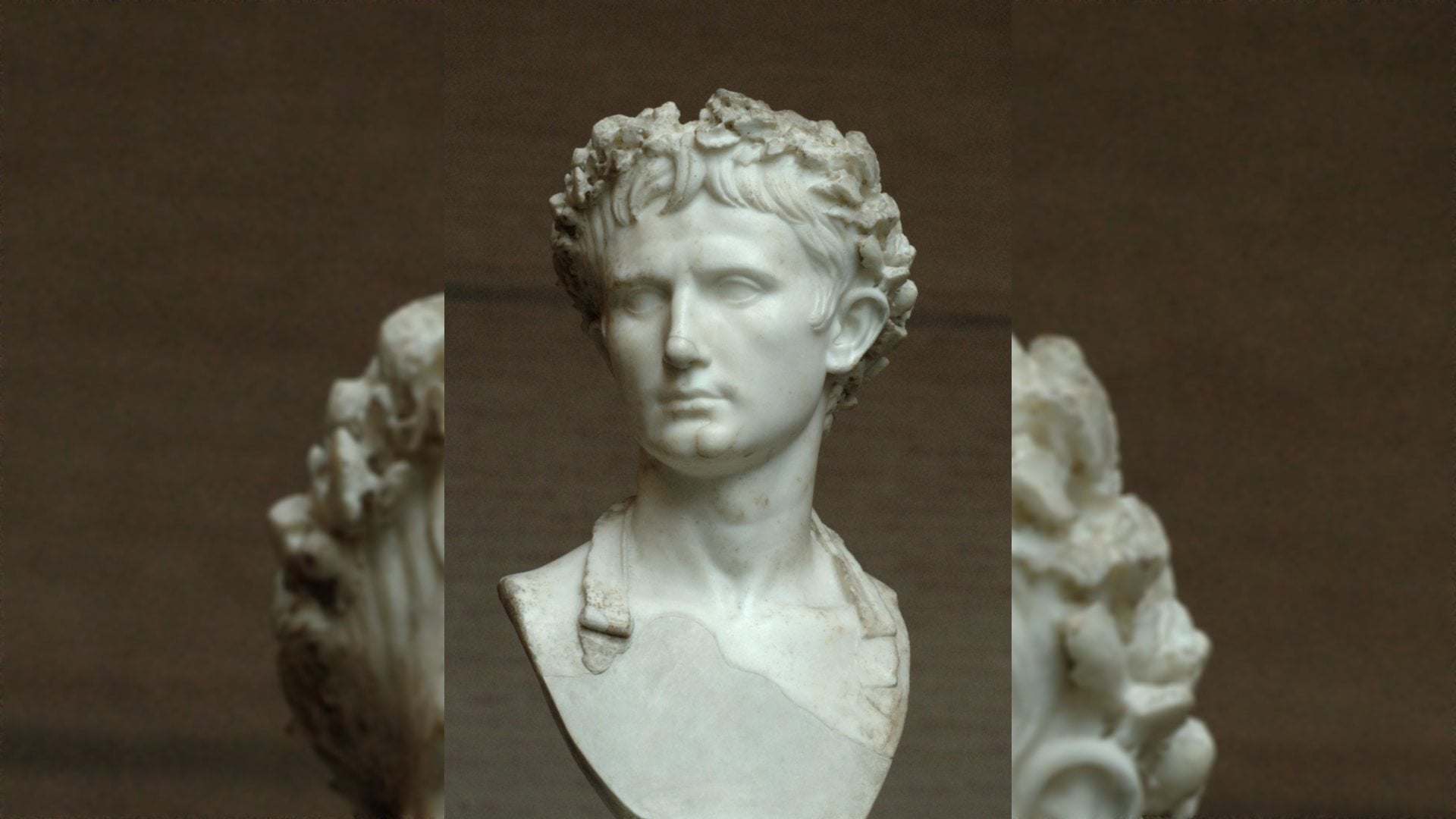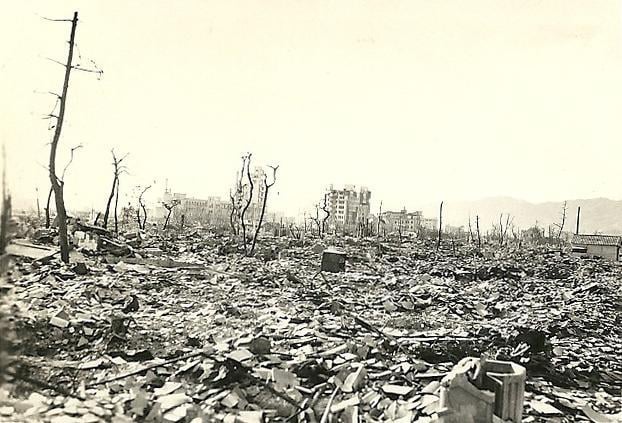
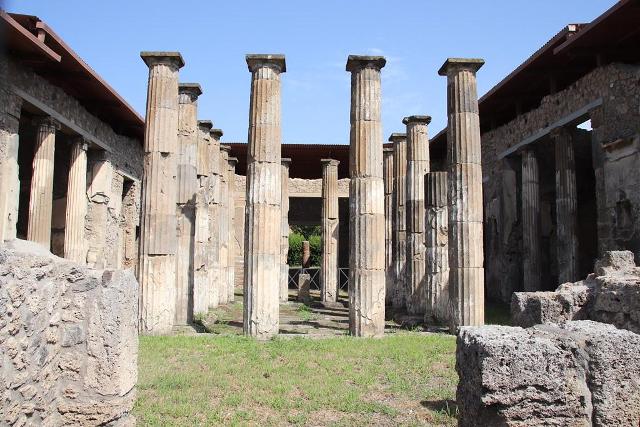
On August 24, 79 CE, Mount Vesuvius erupted and buried the Roman cities of Pompeii, Herculaneum, and nearby settlements under ash, rock, and volcanic debris. For the people living around the Bay of Naples, it was a sudden disaster that destroyed homes, businesses, and entire communities. At the time, it showed the overwhelming power of nature in a part of the Roman world that had seemed prosperous and secure. It still matters today because the ruins preserved by the eruption give historians an unusually detailed picture of everyday ancient life, from streets and workshops to murals, food, and written messages. Few events from the ancient world have left behind such a vivid record of how ordinary people lived.
Get The Latest News!
Don't miss our top stories and need-to-know news everyday in your inbox.
The eruption was described by Pliny the Younger, whose letters became one of the most important first-hand accounts of a natural disaster in classical history. His uncle, Pliny the Elder, died during the crisis while trying to observe the event and assist others by sea. Over time, the ash-covered cities became one of archaeology’s greatest discoveries. Excavations revealed not only Roman engineering and urban planning, but also the habits, inequalities, and routines of daily life. Because of that, the tragedy of 79 CE remains central to both the study of the ancient Mediterranean and the modern science of volcanology.
More than a thousand years later, August 24 marked another turning point in Europe. In 410 CE, the Visigoths under Alaric entered and sacked Rome. Although the Western Roman Empire did not fall at that exact moment, the capture of the city had enormous symbolic force. Rome had long represented imperial order and military strength, and its sack shocked people across the Roman world. The event exposed the empire’s internal weakness, including political instability, military strain, and difficulty managing relations with migrating and competing groups along its borders. In later centuries, it came to stand as one of the clearest signs that Roman power in the West was no longer secure.
This date also carries weight in the history of exploration and empire. In 1572, the St. Bartholomew’s Day massacre began in France, where thousands of Huguenots, or French Protestants, were killed in Paris and beyond during the Wars of Religion. The killings grew out of years of deep religious and political tension between Catholics and Protestants. What began as violence targeting Huguenot leaders soon spread more widely. The massacre damaged hopes for peaceful coexistence and left a deep mark on French and European history. It remains a stark example of how political fear and religious division can turn into mass violence.
A very different kind of event followed in 1814, when British forces burned public buildings in Washington, D.C., during the War of 1812. The attack came after American forces had earlier burned parts of York, in present-day Toronto, and it formed part of a broader conflict between the United States and Britain that was tied to trade, naval power, and frontier tensions. The burning of the Capitol and the President’s House was a major humiliation for the young United States, but it did not decide the war. Instead, the episode became part of a national story about vulnerability, recovery, and state-building in the early republic.
In 1853, the first practical potato chips are often said to have been created on this date by George Crum in Saratoga Springs, New York, though the story is difficult to verify in full and has grown through popular retelling. Whether or not every detail is exact, the tale reflects the growth of hotel dining, regional food culture, and commercial snack production in the United States. It is a reminder that small innovations in everyday life can grow into large industries and lasting cultural habits.
The modern era brought events with wider scientific and geopolitical effects. In 1891, Thomas Edison received a patent related to motion-picture technology, part of the broader race to develop devices that could record and display moving images. These experiments helped lay the groundwork for cinema, which would become one of the most influential art forms and industries of the twentieth century. Film changed how people shared stories, recorded reality, and built mass culture across national boundaries.
August 24, 1932, saw Amelia Earhart become the first woman to fly nonstop across the United States from coast to coast. Her achievement followed her earlier Atlantic flight and strengthened her place as one of the best-known aviators of her time. Earhart’s flights mattered not only as technical feats but also because they broadened public ideas about who could lead in aviation and public life. In the early twentieth century, when flight still carried great risk and prestige, her record flights inspired interest in aviation around the world.
Another defining event occurred in 1954, when Brazil’s President Getúlio Vargas died by suicide in office. Vargas had dominated Brazilian politics for decades, ruling at times as an elected leader and at other times as an authoritarian one. His death came during a severe political crisis and prompted a powerful public reaction. For many Brazilians, he embodied both modernization and centralization, labor reform and political control. His legacy has remained complex, reflecting the tensions of twentieth-century state-building in Latin America.
Space exploration added a more hopeful note to the day in 2006, when the International Astronomical Union voted to redefine the term “planet,” leading Pluto to be classified as a dwarf planet. The decision sparked public debate because Pluto had long held a special place in popular culture and education. Yet the change showed how science works: definitions are revised when new evidence and broader understanding require them to be. As astronomers discovered more objects in the outer solar system, they needed clearer categories to describe them.
Several notable people were born on August 24 and left lasting marks in different fields. Jorge Luis Borges, born in 1899 in Argentina, transformed modern literature through short stories and essays that explored memory, time, language, and imagination. His work influenced writers far beyond Latin America. In 1945, Marlee Matlin was born; she became an acclaimed actor and an important public figure in disability representation, especially after becoming the first deaf performer to win an Academy Award. Steve Guttenberg, born in 1958, became a familiar face in popular film comedy during the 1980s, reflecting the era’s mainstream entertainment culture.
This date also marks the deaths of figures whose lives shaped broader history. In 79 CE, Pliny the Elder died during the Vesuvius eruption. He was a Roman author and natural philosopher best known for his encyclopedic work Natural History, which gathered knowledge on subjects ranging from geography to animals and minerals. In 1943, Simone Weil, the French philosopher and writer, died in exile in England. Her work on justice, suffering, labor, and spiritual life continued to influence political thought and moral philosophy long after her death.
Taken together, the events of August 24 show how one date can hold destruction, discovery, conflict, invention, and cultural change all at once.