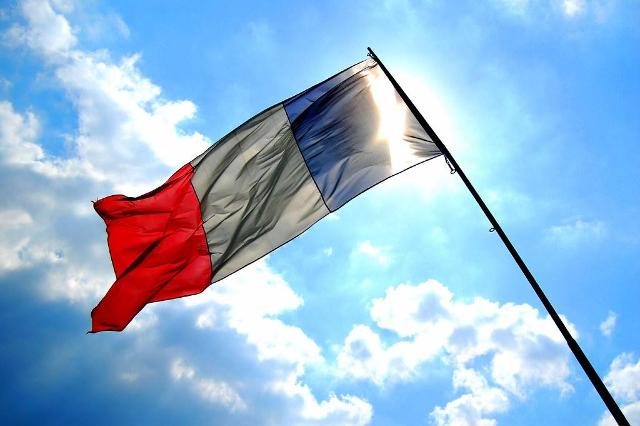
On September 21, one of the most important events in world history took place in 1792, when the French National Convention voted to abolish the monarchy. With that decision, France formally ended centuries of royal rule and moved toward becoming a republic. At the time, the change reflected the deep political and social unrest of the French Revolution, which had already shaken Europe. It mattered because it challenged the old idea that kings ruled by inherited right. It still matters today because it helped spread modern debates about citizenship, rights, popular government, and the relationship between the state and the people.
Get The Latest News!
Don't miss our top stories and need-to-know news everyday in your inbox.
The fall of the French monarchy did not happen suddenly. France had been under pressure for years from financial crisis, social inequality, poor harvests, and anger over privilege in the old system. After the revolution began in 1789, royal authority weakened step by step. By September 1792, war with other European powers and growing distrust of King Louis XVI pushed events further. The monarchy’s abolition marked a turning point not only for France but also for Europe, where rulers and reformers alike watched closely. The republic that followed would pass through violence and instability, yet the date remains a major symbol of political transformation.
Another turning point came in 1558, when Charles V died. He had ruled a vast empire that included Spain, the Low Countries, parts of Italy, and overseas territories in the Americas. His reign showed how large and interconnected European power had become in the 16th century. By the time of his death, religious division caused by the Protestant Reformation and the strain of governing far-flung lands had already changed the balance of power in Europe. His passing marked the end of one phase of Habsburg dominance and the beginning of a more divided political era.
The industrial age left its own mark on this date. In 1843, John Williams Wilson took possession of the Strait of Magellan for Chile. This narrow sea route at the southern end of South America had long been important for navigation between the Atlantic and Pacific Oceans. Chile’s move reflected both strategic thinking and the wider 19th-century pattern of states asserting control over key trade and travel routes. Before the Panama Canal existed, the strait carried great international importance for shipping, exploration, and naval movement.
In 1937, J. R. R. Tolkien’s The Hobbit was published. Though a work of fiction, its cultural effect was far-reaching. The novel helped define modern fantasy literature and introduced readers to a carefully built imaginary world shaped by language, myth, and history. It later opened the way for The Lord of the Rings, influencing books, film, games, and popular culture around the world. Its publication is a reminder that artistic imagination can leave a lasting mark just as surely as political events do.
Only a few years later, in 1942, a Boeing B-29 Superfortress made its first flight in the United States. Developed during the Second World War, the aircraft represented a major leap in aviation technology, with pressurized cabins, longer range, and heavy bombing capacity. It played a central role in the air war in the Pacific. The B-29 is remembered both as a symbol of industrial and engineering achievement and as part of the destructive power of modern warfare. Its history shows how technological progress can bring both innovation and grave human consequences.
This date is also closely tied to the struggle for social and political rights in southern Africa. In 1964, Malta gained independence from the United Kingdom. For Malta, the moment marked the end of colonial rule and the beginning of a new chapter as a self-governing state in the Mediterranean. Independence came during a broader period in which many territories in Africa, Asia, and elsewhere were redefining their place in the world after empire. Malta’s later development into a republic and a member of major international institutions reflects the long afterlife of that transition.
In 1972, Ferdinand Marcos declared martial law in the Philippines, a decision announced publicly soon afterward and tied to this date in the country’s political history. Marcos argued that the move was needed for order and security, but martial law led to tighter executive control, arrests of opponents, restrictions on the press, and major changes in public life. The period remains central to modern Philippine history because it shaped institutions, public memory, and later movements for democratic restoration.
A very different kind of milestone came in 1981, when Belize joined the community of independent nations. Formerly known as British Honduras, Belize became fully sovereign after a long process shaped by colonial history, regional diplomacy, and territorial questions involving neighboring Guatemala. Independence gave the country formal control over its own domestic and foreign affairs. It remains an important date in Central American and Caribbean history, showing how smaller states also played significant roles in the global movement away from colonial rule.
September 21 has also produced notable births across many fields. In 1866, H. G. Wells was born in England. He became one of the most important early writers of science fiction, with works such as The Time Machine, The War of the Worlds, and The Invisible Man. His fiction explored technology, class, empire, and the future, helping shape how later generations imagined scientific possibility and social change.
Nearly a century later, in 1934, Leonard Cohen was born in Montreal, Canada. Cohen was a poet, novelist, and singer-songwriter whose work combined spare language with emotional depth. Songs like “Hallelujah” reached audiences across generations and were repeatedly reinterpreted by other artists. He is remembered not only for memorable lyrics but also for showing how music and literature can speak to shared human questions.
Another major cultural figure arrived in 1947, when Stephen King was born in the United States. King became one of the world’s best-known novelists, especially in horror, suspense, and supernatural fiction. His stories often placed fear within everyday settings, making them widely accessible to readers. Through novels, film adaptations, and sheer influence on popular storytelling, he helped define modern genre fiction.
The world of sport is represented by Bill Murray, born in 1940 in South Africa, who became one of the leading cricket players of his generation.
This date also marks the deaths of several influential figures. In 1558, as noted earlier, Charles V died after shaping European and global politics during an age of empire, religious conflict, and overseas expansion. His rule linked developments in Europe to those in the Americas in ways that would have long-lasting effects.
In 1832, Sir Walter Scott died in Scotland. Scott was a novelist and poet whose historical fiction, including Ivanhoe and Waverley, had a major influence on 19th-century literature. He helped popularize the historical novel and shaped how readers imagined the medieval past, national identity, and romantic adventure.
In 1971, Bernardo Houssay of Argentina died. He was a Nobel Prize-winning physiologist whose research on hormones and metabolism expanded understanding of diabetes and the endocrine system. His work also highlighted the growing role of Latin American scientists in global research.
Then, in 1998, Florence Griffith Joyner died. Known for her extraordinary speed and distinctive style, she became one of the most celebrated sprinters in track and field history. Her Olympic achievements brought worldwide attention, and her records remained part of the sport’s conversation long after her death.
Taken together, the events of September 21 show how one date can hold revolutions, independence movements, inventions, books, games, and personal legacies side by side.