Fifty years ago, a gathering in a Dublin kitchen began a musical partnership that would reach stadiums around the world. On Sept. 25, 1976, the musicians who became U2 assembled at drummer Larry Mullen Jr.’s home. As Sept. 25, 2026, marks that anniversary, the meeting stands out as the day’s defining milestone: an informal response to a school notice that eventually produced a Rock & Roll Hall of Fame band.
Get The Latest News!
Don't miss our top stories and need-to-know news everyday in your inbox.
The date’s earlier history includes a very different route to musical fame. On Sept. 25, 1970, ABC premiered “The Partridge Family,” a sitcom about a mother and her children becoming a touring pop group. Shirley Jones played the mother, Shirley Partridge, while David Cassidy played her son Keith. The premise made music part of the weekly story rather than an occasional guest attraction, giving viewers a fictional family whose records they could also hear outside the show.
Screen Gems had already linked television and pop success with “The Monkees.” “The Partridge Family,” inspired by the real-life family group the Cowsills, extended that approach. Its recording of “I Think I Love You” became a No. 1 pop hit later that fall. Professional studio musicians, including members of the Wrecking Crew, supplied the instrumental work behind the fictional band. The series helped turn Cassidy into a recording star while demonstrating how effectively television characters could sell real records.
Six years later, Mullen’s school notice brought prospective musicians to his family’s kitchen in Artane, Dublin. Among those who gathered were the four future members of U2: Mullen, Bono, the Edge and Adam Clayton. The band’s official history identifies Saturday, Sept. 25, 1976, as that first gathering. This was a beginning built around the desire to play together, not the arrival of a fully developed musical act.
The importance of that afternoon became clearer over the following decade. U2’s 1987 album “The Joshua Tree” won the Grammy for album of the year, while “With or Without You” and “I Still Haven’t Found What I’m Looking For” reached No. 1. The group entered the Rock & Roll Hall of Fame in 2005. Those later achievements give the kitchen meeting its historical weight: It brought together the core partnership behind an internationally influential body of work.
On Sept. 25, 1979, “Evita” opened at New York’s Broadway Theatre. With music by Andrew Lloyd Webber, lyrics and book by Tim Rice, and direction by Harold Prince, the production featured Patti LuPone as Eva Perón, Mandy Patinkin as Che and Bob Gunton as Juan Perón. Its score included “Don’t Cry for Me Argentina,” “Buenos Aires” and “A New Argentina,” placing political power and public image at the center of a large-scale musical.
The opening began a run of 1,567 performances that continued until June 1983. At the 1980 Tony Awards, “Evita” won seven awards, including best musical, book, score and direction. LuPone and Patinkin also won for their performances. The production’s extended run and awards established its importance on Broadway, joining a politically focused story to music that could reach audiences beyond the theater.
Sept. 25, 1980, brought a loss that changed the course of rock history. Led Zeppelin drummer John Bonham was found dead at guitarist Jimmy Page’s home in Windsor, England, after the group had been rehearsing for a North American tour. The band’s official chronology records that his death was ruled accidental. The planned tour was canceled, abruptly ending preparations for the group’s return to North American stages.
The lasting consequence was not simply a change behind the drum kit. On Dec. 4, 1980, Led Zeppelin announced that the surviving members would not continue as before, citing their friend’s loss and respect for his family. Their decision made Bonham’s death the dividing line between Led Zeppelin as an ongoing band and the reunions that followed.
On Sept. 25, 2006, music helped mark New Orleans’ recovery from Hurricane Katrina. U2 and Green Day performed together as the Louisiana Superdome reopened, with a set that included “Wake Me Up When September Ends,” “The Saints Are Coming” and “Beautiful Day.” New Orleans artists Irma Thomas and Allen Toussaint performed the national anthem, ensuring that the city’s own musical community had a prominent place in the homecoming.
The performance also supported Music Rising through a benefit download. For participating local musicians, the occasion represented more than entertainment before a football game. In the Saints’ later oral history, Trombone Shorty recalled it as a moment that affirmed musicians’ return and their role in rebuilding the city. The event connected international rock audiences with a community whose musical life was part of its recovery.
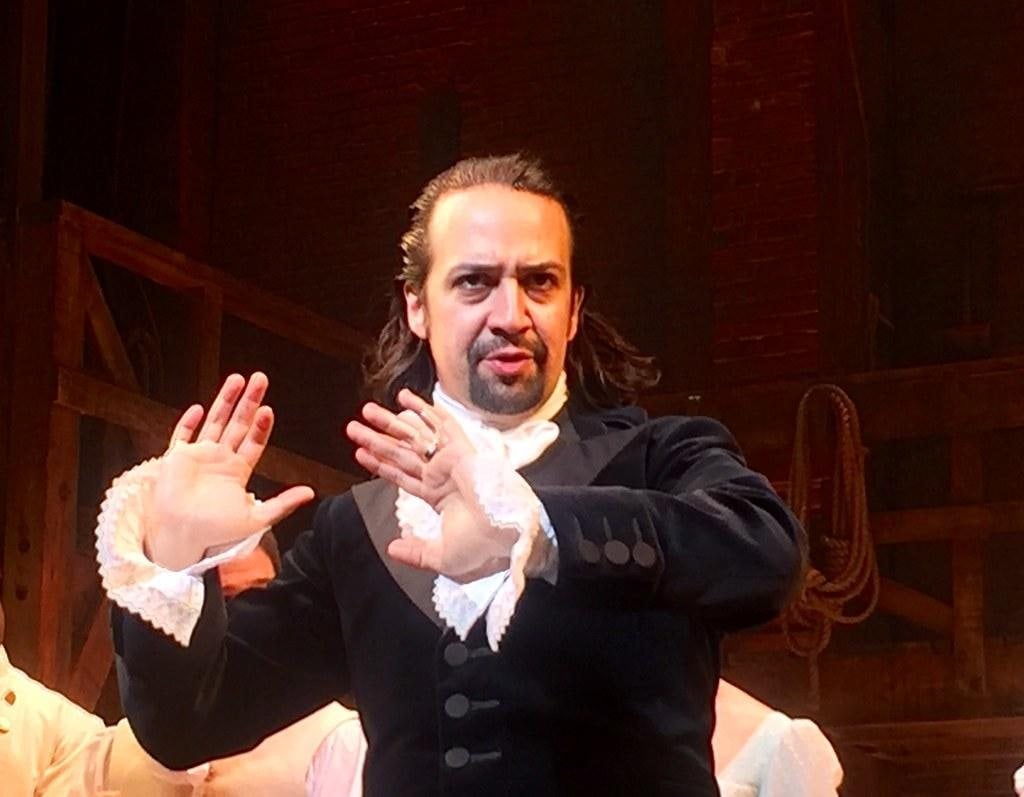
Finally, on Sept. 25, 2015, the original Broadway cast recording of “Hamilton” received its digital release. The 46-track album carried Lin-Manuel Miranda’s musical about Alexander Hamilton beyond the theater, combining hip-hop and pop-driven musical storytelling. Listeners could follow performances by Miranda, Leslie Odom Jr., Phillipa Soo and their fellow cast members without attending a Broadway performance; the physical album followed Oct. 16.
The recording won the Grammy for best musical theater album in 2016. Its release gave the show a life as a recorded work, preserving its original performers while making its story available to a much wider audience. For Sept. 25, it provides a fitting final milestone: another moment when music moved beyond the room where it began.