 This Day in History: October 16, 2026
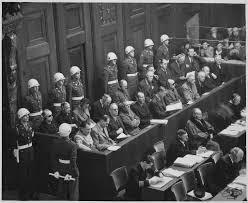
Eighty years ago, on October 16, 1946, ten senior figures in Nazi Germany were executed after their convictions at the first Nuremberg trial. The proceedings followed a war that had devastated Europe and exposed the systematic murder of millions of people. Their lasting importance lay in establishing that government officials and military leaders could be held personally responsible under international law. Although the trial’s procedures and its organization by the victorious Allies drew criticism, Nuremberg became a foundation for later efforts to prosecute war crimes and crimes against humanity.
October 16 also connects breakthroughs in medicine, changes in global power, artistic achievements, and public demands for equal treatment. The following events trace those connections in chronological order.
Major Historical Events
1813: The Battle of Leipzig begins
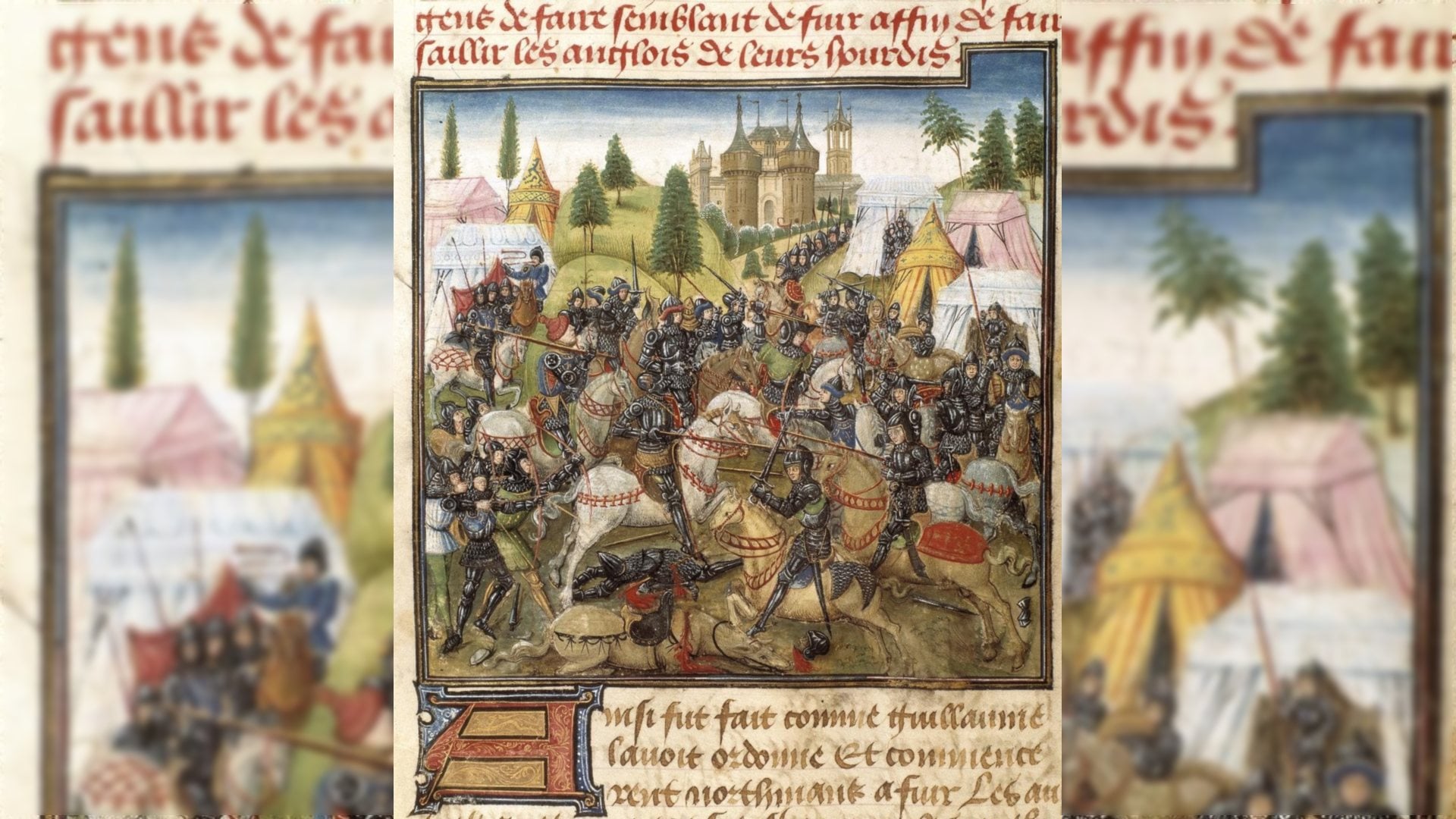
Fighting opened near Leipzig between Napoleon Bonaparte’s forces and a coalition that included Russia, Prussia, Austria, and Sweden. Over four days, hundreds of thousands of soldiers took part in what became known as the Battle of the Nations.
Get The Latest News!
Don't miss our top stories and need-to-know news everyday in your inbox.
Napoleon’s defeat forced him to withdraw westward and weakened French control over central Europe. Coming after his disastrous invasion of Russia, Leipzig helped open the way for the invasion of France and his first abdication in 1814.
1846: Ether anesthesia receives a landmark public demonstration
At Massachusetts General Hospital in Boston, dentist William T. G. Morton administered ether while surgeon John Collins Warren removed a tumor from a patient’s neck. The successful demonstration showed a medical audience that surgery could be performed without the intense pain patients had generally endured.
Other practitioners had already experimented with anesthesia, including Crawford Long, who used ether in 1842. The Boston demonstration nevertheless helped bring the technique to wide attention. Its rapid adoption transformed surgery, making longer and more complex operations possible.
1905: The partition of Bengal takes effect
British colonial authorities divided Bengal, creating a new province of Eastern Bengal and Assam. Officials described the change as an administrative response to the difficulty of governing a large population.
Many Indian opponents viewed it as a means of weakening Bengali political organization by dividing communities. Support varied, however, and some Muslims in eastern Bengal welcomed the prospect of greater representation and investment. Opposition strengthened the Swadeshi movement, which encouraged Indian-made goods and boycotts of British products. The partition was reversed in 1911, but the dispute left a lasting mark on anticolonial politics.
1923: The Disney studio is founded
Walt Disney and his brother Roy established the business that became the Walt Disney Company. Their early enterprise developed from short animated films into a major force in film, television, and other entertainment.
Its later success helped make animation central to popular culture rather than a minor addition to cinema programs. Disney’s growth also illustrates how characters and stories could move across different media and reach audiences worldwide.
1945: The Food and Agriculture Organization is established
Representatives meeting in Quebec City founded the Food and Agriculture Organization, now a United Nations specialized agency. Wartime shortages had reinforced an older problem: producing enough food did not necessarily ensure that everyone could obtain it.
FAO’s work brought agriculture, nutrition, fisheries, and forestry into international cooperation. October 16 later became World Food Day, linking the organization’s founding to continuing efforts against hunger and malnutrition.
1946: The Nuremberg sentences are carried out
Following the international tribunal’s judgments, ten condemned Nazi leaders were hanged at Nuremberg Prison. Hermann Göring, also sentenced to death, had died by suicide shortly before the executions.
The trial assembled an extensive documentary record of Nazi aggression and atrocities. Its legacy extended beyond punishment: it challenged the claim that holding state office, or following superior orders, automatically protected someone from responsibility for international crimes.
1964: China conducts its first nuclear test
China detonated its first atomic device at the Lop Nur test site in Xinjiang, becoming the fifth country to test a nuclear weapon. The achievement followed years of development, including earlier Soviet assistance before relations between the two countries deteriorated.
The test changed strategic calculations during the Cold War, particularly in Asia. It also added urgency to international debates over nuclear proliferation and the risks of additional countries acquiring these weapons.
1968: An Olympic medal ceremony becomes a civil-rights statement
After winning gold and bronze in the men’s 200 meters at the Mexico City Olympics, American sprinters Tommie Smith and John Carlos raised black-gloved fists during the medal ceremony. Australian silver medalist Peter Norman wore an Olympic Project for Human Rights badge in support.
Smith and Carlos used the international stage to draw attention to racial discrimination and human rights. Under pressure from Olympic authorities, the U.S. Olympic Committee suspended them from the American team and sent them home. The ceremony remains a widely recognized example of athletes using sporting visibility to express social concerns.
1978: John Paul II is elected pope
The election of Polish cardinal Karol Wojtyla made him the first non-Italian pope since 1523. Taking the name John Paul II, he became the leader of the Roman Catholic Church after the brief papacy of John Paul I.
His election carried particular significance in communist-ruled Poland. During a papacy lasting more than 26 years, his international travels, religious leadership, and support for human dignity influenced communities far beyond the Vatican.
2002: The Bibliotheca Alexandrina opens
Egypt inaugurated the Bibliotheca Alexandrina in Alexandria, reviving the city’s association with its celebrated ancient library. The modern institution was not a reconstruction of the lost collection, but a new center for books, research, museums, and cultural exchange.
Its opening reflected international cooperation and the continuing importance of preserving knowledge while making it accessible to new audiences.
Notable Births
Oscar Wilde, born in Dublin in 1854, earned lasting recognition through plays, essays, and The Picture of Dorian Gray. His wit and observations about social convention shaped English-language literature, while his imprisonment for sexual relationships with men profoundly affected his life and later reputation.
German writer Günter Grass was born in Danzig, now Gdansk, in 1927. His novel The Tin Drum explored Germany’s troubled twentieth-century history. Awarded the Nobel Prize in Literature in 1999, he also became a prominent, sometimes controversial participant in public debate.
Indian actor and dancer Hema Malini, born in 1948, became a leading figure in Hindi cinema. Alongside her film career, she maintained a strong association with classical dance and later entered parliamentary politics.
Tennis champion Naomi Osaka was born in Japan in 1997. Her four Grand Slam singles titles made her one of her generation’s leading players, while her discussions of mental health drew attention to pressures faced by elite athletes.
Notable Deaths
Marie Antoinette was executed in Paris in 1793 during the French Revolution. As queen of France, she had become closely associated in public criticism with royal privilege and spending. Her death followed the overthrow of the monarchy and the execution of Louis XVI earlier that year.
Israeli military leader and politician Moshe Dayan died in 1981. He held senior commands and government posts during major Arab-Israeli conflicts. As foreign minister, he also participated in negotiations that led to the 1978 Camp David Accords.
Across these anniversaries, October 16 brings together the exercise of power, the pursuit of knowledge, and efforts to widen human opportunity.