Nov. 2
Get The Latest News!
Don't miss our top stories and need-to-know news everyday in your inbox.
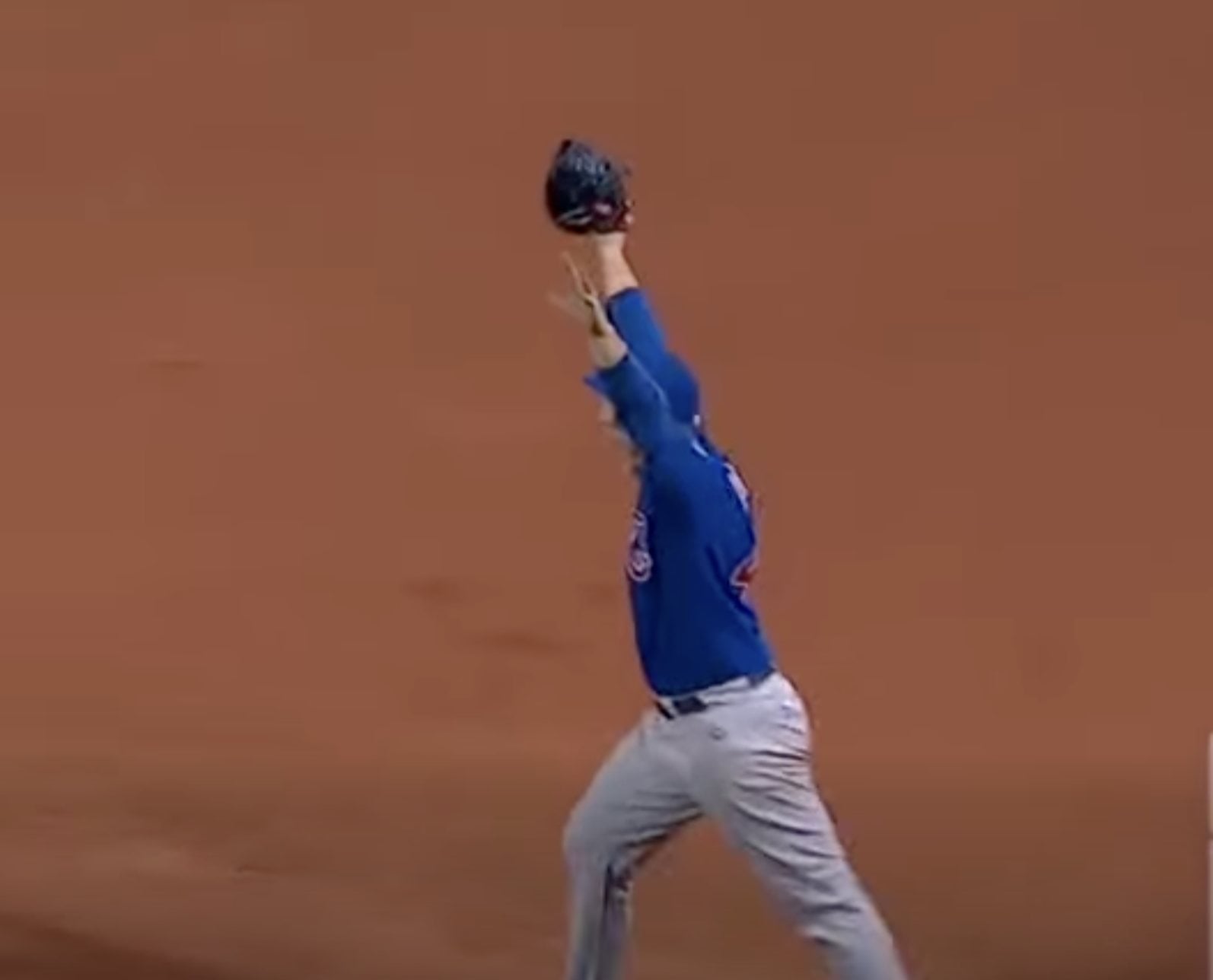
The Chicago Cubs turned a century of disappointment into a championship in the World Series game dated Nov. 2, 2016. Their 8-7, 10-inning victory over Cleveland ended a 108-year title drought, giving Illinois fans a celebration generations had waited to see. Ten years later, it remains the defining sports milestone associated with this date.
Long before that baseball breakthrough, Nov. 2 produced a college football comeback that helped establish the reputation of another Midwestern sports institution. In 1935, Notre Dame rallied from a 13-0 fourth-quarter deficit to defeat Ohio State 18-13 in Columbus, Ohio. The meeting became known as a “Game of the Century,” with its dramatic finish giving the billing substance.
Notre Dame scored twice to close within 13-12, but Ohio State still had possession late in the game. A Buckeyes fumble near midfield gave the Irish another chance. Andy Pilney helped move the offense into position before Bill Shakespeare threw the winning 19-yard touchdown pass with 32 seconds remaining. What had looked like a comfortable Ohio State victory became a stunning reversal in the closing minutes.
The result carried consequences beyond the afternoon. Notre Dame improved to 6-0, while Ohio State absorbed what would be its only defeat of the season. The Irish did not turn the comeback into an unbeaten campaign, finishing 7-1-1, but the Columbus victory became an enduring example of the program’s ability to recover when a game appeared lost.
On Nov. 2, 1947, international golf completed a return that mattered more than the lopsided final score. The United States defeated Great Britain 11-1 at Portland Golf Club in Oregon in the first Ryder Cup since 1937. World War II had interrupted the competition, leaving a decade between matches and making the event’s revival an important step in restoring international sporting ties.
American captain Ben Hogan led the winning team, while Henry Cotton captained Britain. The Americans dominated on a course affected by extremely wet conditions. Sam King earned Britain’s only point by defeating Herman Keiser 4 and 3 in singles. Byron Nelson and Sam Snead were the only American players who had also been members of the 1937 team.
The competition also depended on assistance away from the course. Oregon businessman Robert A. Hudson helped fund the British team while food rationing remained in force in Britain. He greeted the players in New York and accompanied them on their rail journey west. His support helped bring the matches back when the costs of postwar travel could have prevented their resumption.
In 2016, the Cubs completed their comeback from a 3-1 World Series deficit in a Game 7 that began Nov. 2 in Cleveland and ended after midnight Eastern time Nov. 3. That distinction explains why baseball records attach the championship game to Nov. 2 even though its final out came the following morning at the ballpark.
Chicago’s path through the finale was anything but direct. Rajai Davis hit a two-run homer in the eighth inning to help Cleveland tie the score 6-6. After nine innings, rain interrupted play for 17 minutes. During the break, Jason Heyward gathered his teammates for a meeting before they returned for extra innings.
Ben Zobrist delivered the go-ahead double in the 10th, and Miguel Montero added an RBI single. Cleveland scored once more, but Chicago held on for its first World Series championship since 1908. Zobrist earned World Series MVP honors, completing a night in which the Cubs survived both a lost lead and the pressure of their franchise’s long wait.
Five years later, on Nov. 2, 2021, Atlanta ended a championship drought of its own, defeating Houston 7-0 in Game 6 to win the World Series four games to two. It was the Braves’ first title since 1995 and the fourth modern World Series championship in franchise history.
Max Fried pitched six shutout innings to earn the victory. Freddie Freeman doubled and homered in the clincher, while Jorge Soler received the World Series MVP award. Their accomplishments became part of baseball’s permanent historical collection: Fried’s spikes, Freeman’s bat and Soler’s batting helmet were among the artifacts donated to the National Baseball Hall of Fame after the championship.
On Nov. 2, 2022, Houston answered a different World Series challenge with an unprecedented shared achievement. Cristian Javier, Bryan Abreu, Rafael Montero and Ryan Pressly combined to no-hit Philadelphia in a 5-0 Game 4 victory, evening the series at two games apiece. Javier struck out nine and walked two over six innings before the bullpen finished the job. All five Houston runs came in the fifth inning.
It was the first combined no-hitter in postseason history. Don Larsen’s perfect game for the New York Yankees against Brooklyn in 1956 had been the only previous World Series no-hitter. Houston’s four-pitcher effort added a new kind of entry to that short record, turning a needed victory into a historic night.
Nov. 1
Notre Dame did not invent the forward pass on Nov. 1, 1913. It did, however, give college football a powerful demonstration of what passing could accomplish. With quarterback Gus Dorais throwing and Knute Rockne among his targets, the visitors defeated Army 35-13 at West Point, New York, in a victory that helped establish Notre Dame nationally and broadened the possibilities of offensive football.
Looking back on Nov. 1, 2026, that breakthrough begins a day's history that also includes Seabiscuit's celebrated match-race victory, an important step in the NBA's integration and two World Series championships that ended long waits. Each moment mattered for more than the result alone: It changed a program's standing, opened an opportunity or gave a fan base a championship it had awaited for decades.
Under coach Jesse Harper, Notre Dame used the pass to counter Army's size advantage. Dorais completed 14 of 17 attempts for 243 yards, numbers that showed how effectively a team could move the ball through the air. Dorais and Rockne had practiced their passing connection while working as lifeguards in Ohio during the preceding summer. That preparation helped turn an ambitious strategy into a convincing victory.
The distinction is important: The forward pass had been legal since 1906. Notre Dame's achievement was not introducing a new rule but demonstrating the value of a weapon many teams still treated cautiously. The first meeting between Notre Dame and Army became a landmark because the passing attack worked against a prominent opponent, helping move the Irish into the national conversation while encouraging a more expansive approach to the sport.
Twenty-five years later, on Nov. 1, 1938, Seabiscuit defeated War Admiral by four lengths in their long-awaited match race at Pimlico Race Course in Baltimore. George Woolf rode Seabiscuit against the horse whose 1937 season had included victories in the Kentucky Derby, Preakness and Belmont Stakes. The pairing offered a direct test between two of racing's most celebrated competitors, with no other horses in the field.
Seabiscuit seized the early lead rather than allowing War Admiral to dictate the race. After the horses drew together, Seabiscuit pulled away in the stretch. The decisive margin settled the afternoon's contest and supplied an enduring image of the underdog overcoming the favorite. For a horse whose career had begun with 17 consecutive losses, the victory represented a remarkable reversal of fortune.
The audience extended well beyond Pimlico. Millions followed the race by radio during the Great Depression, when Seabiscuit's rise had made him a symbol of perseverance. The result remains significant not simply because one famous horse beat another, but because a sporting rivalry had become a shared national event.
On Nov. 1, 1950, Chuck Cooper made his NBA debut with the Boston Celtics, taking another important step in professional basketball's integration. Boston had selected the Duquesne standout earlier that year, making him the first Black player drafted by an NBA team. His first appearance followed Earl Lloyd's debut with the Washington Capitols by one day.
That timing separates two milestones sometimes blurred together: Cooper broke the draft barrier, while Lloyd was the first Black player to appear in an NBA game. Cooper's debut turned Boston's historic selection into an on-court reality. He went on to play 66 regular-season games that season, averaging 9.3 points and 8.5 rebounds as the Celtics reached the playoffs. His contribution was both a barrier-breaking achievement and a substantial part of the team's improvement.
On Nov. 1, 2010, the San Francisco Giants defeated the Texas Rangers 3-1 in Game 5 to win the World Series, four games to one. It was the franchise's first championship since 1954 and its first since moving from New York to San Francisco in 1958. A title that had eluded generations of Bay Area fans finally belonged to their city.
Edgar Renteria supplied all three Giants runs with a two-out home run off Cliff Lee in the seventh inning. Tim Lincecum allowed three hits over eight innings and struck out 10, winning a pitching matchup that had remained scoreless through six innings. Brian Wilson finished the ninth, and Renteria earned World Series MVP honors. The clincher combined the pitching and timely offense that made the championship possible.
Five years later, the World Series game dated Nov. 1, 2015, delivered another drought-ending championship. The Kansas City Royals beat the New York Mets 7-2 in 12 innings at Citi Field, completing a four-games-to-one series victory and claiming their first title since 1985. Kansas City erased a two-run deficit in the ninth inning, then scored five times in the 12th. After losing the previous year's World Series, the Royals finished this one as champions, turning another late comeback into the defining result of their season.
Oct. 31
Earl Lloyd’s first NBA appearance did not come in a championship game, but its significance reached far beyond the scoreboard. On Oct. 31, 1950, the Washington Capitols forward became the first Black player to compete in an NBA game, opening a new chapter in the league’s history during an era of segregation. Seventy-six years later, his debut stands as the most consequential milestone on a date that also produced a defining college football play, a tennis champion’s introduction and a historic rugby title.
Washington lost that night to the Rochester Royals, 78-70. The result, however, was secondary to Lloyd’s presence on the court. His appearance established an important distinction: He was the first Black player to play in the NBA, not the only pioneer involved in integrating the league. Chuck Cooper made his Boston Celtics debut Nov. 1, and Nat “Sweetwater” Clifton first played for the New York Knicks on Nov. 4. Their opening games made the 1950-51 season a turning point for professional basketball.
Lloyd brought a strong college background to that assignment. At West Virginia State, he helped lead an undefeated, 30-0 team in 1947-48. His professional career later included a starting role with the Syracuse Nationals’ 1955 NBA championship team. Known for defense and rebounding, he built a career beyond the historical importance of his first night. His legacy rests both on breaking a barrier and on showing that he belonged at the sport’s highest professional level.
Nine years later, Oct. 31, 1959, became inseparable from Billy Cannon and LSU football. With the Tigers trailing Mississippi 3-0 at Tiger Stadium in Baton Rouge, Cannon returned a punt 89 yards for the game’s only touchdown. LSU won 7-3, turning a closely contested matchup between unbeaten rivals into one of the defining games of Cannon’s college career. The return gave a defensive struggle its decisive offensive moment.
Cannon escaped would-be tacklers after taking the ball at LSU’s 11-yard line and raced down the sideline. Even then, the Tigers still had work to do: Mississippi drove to the LSU 1 before the defense stopped the Rebels on downs in the closing moments. Cannon went on to become LSU’s first Heisman Trophy winner that season. His Halloween return remains a signature play in the history of the award, combining an individual performance with a game-changing result against a major rival.
On Oct. 31, 1994, a different kind of beginning unfolded in Oakland, California. Venus Williams, just 14, won her first professional tennis match, defeating Shaun Stafford 6-3, 6-4 at the Bank of the West Classic. The straight-set victory offered an early demonstration of the power, court coverage and competitive confidence that would become central to her game. It was an introduction, rather than a coronation, but Williams immediately showed she could compete with established professionals.
Playing as an unranked wild card, Williams advanced to face Arantxa Sanchez Vicario and lost in three sets. That brief first tournament became the starting point for a career that included five Wimbledon singles championships and two U.S. Open singles titles. Williams also reached the No. 1 singles ranking in 2002. Viewed against those later achievements, the Oakland victory marks the first completed step in a career that helped shape women’s tennis for decades.
Baseball’s contribution to the date came with an important calendar distinction. Game 4 of the 2001 World Series began Oct. 31 at Yankee Stadium, but its winning swing arrived after midnight on Nov. 1. Before that happened, Tino Martinez rescued the New York Yankees from a looming defeat. With two outs in the ninth inning, his two-run homer against Arizona Diamondbacks reliever Byung-Hyun Kim tied the score at 3 and forced extra innings.
Derek Jeter then homered in the 10th to give New York a 4-3 victory and even the series at two games apiece. The late finish earned him the nickname “Mr. November.” The distinction matters in recalling the anniversary: Martinez’s tying homer happened on Halloween, while Jeter’s winner belonged to the following calendar day. Together, the swings turned a potential 3-1 series deficit into a fresh start for the Yankees.
On Oct. 31, 2015, New Zealand delivered a championship breakthrough at Twickenham in London, beating Australia 34-17 in the Rugby World Cup final. The All Blacks became the first team to retain the men’s title and the first to win it three times. Their victory followed the championship they had won at home in 2011, establishing a new standard for sustained success in the tournament.
The final required New Zealand to withstand a serious challenge. After falling behind 21-3, Australia closed to 21-17 through tries by David Pocock and Tevita Kuridrani. Dan Carter helped restore control with a drop goal and a penalty, and Beauden Barrett added a late try to secure the victory. New Zealand’s historic achievement was not simply reaching another final, but finishing the job after its opponent had brought the championship back within reach.