

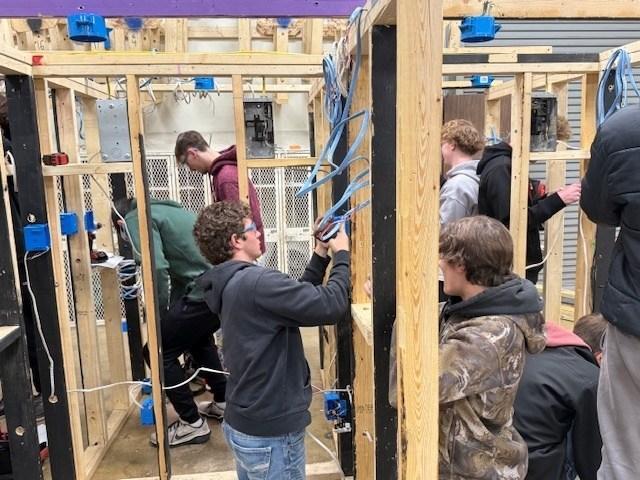
JERSEYVILLE – At Jersey Community High School, students in the Welding and Electricity programs are getting hands-on experience to meet a rising demand for skilled tradespeople.
Get The Latest News!
Don't miss our top stories and need-to-know news everyday in your inbox.
The work of students in these programs were highlighted in a social media post last week from Jersey Community Unit School District (CUSD) 100. The teachers leading these programs recently shared more insights behind the photos and highlighted the benefits their courses have to offer.
Electricity Students Gain Experience In Labs, Field Trips
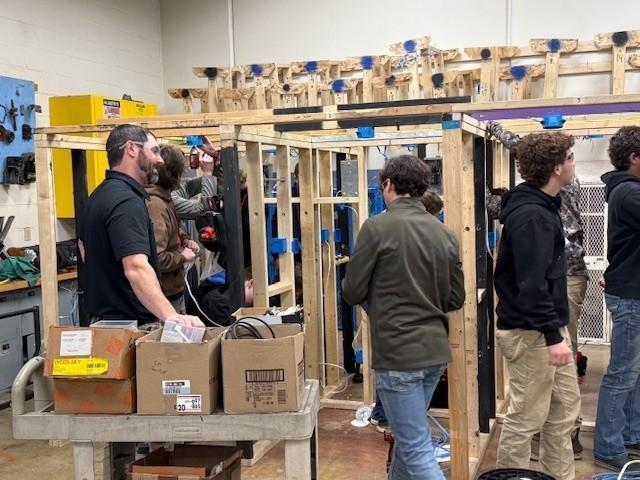
JCHS Electricity Teacher Luke Spainhoward said the recently shared photos show his students leaning first-hand about Ground Fault Circuit Interrupters (GFCIs).
“These students are working in our ‘mock’ residential wiring lab,” Spainhoward said. “They are currently working on circuits that involve GFCI receptacles. They have been learning about the theory behind GFCIs and how they can be used to protect from electrical shock.”
In these “residential wiring labs,” Spainhoward said students perform 'rough-in' installations for receptacles, switches, and lighting fixtures, translating electrical theory into essential hands-on experience with real-world application.
JCHS revived its electrical program just last year to resounding success, as Spainhoward said student interest has been “overwhelming.”
“We are committed to capitalizing on this enthusiasm by maximizing meaningful, hands-on lab experiences,” he added. “We believe these practical skills are the foundation for any student's future success, no matter which career path they ultimately choose."
Electrical students also gain real-world insights through guest speakers such as Financial Advisor Shane Desherlia and field trips to locations like JF Electric, The Carpenters Union, Southwestern Illinois College (SWIC) in Belleville, and Lewis and Clark Community College (LCCC) in Godfrey, with LCCC offering its Industrial Electricity and Commercial Driver's License (CDL) programs.
Spainhoward said these experiences are essential to help students make informed career choices by presenting them with some of their various options after high school, adding the program is dedicated to expanding its opportunity offerings in the future.
Welding Students Work Hard On Individual, Community Projects
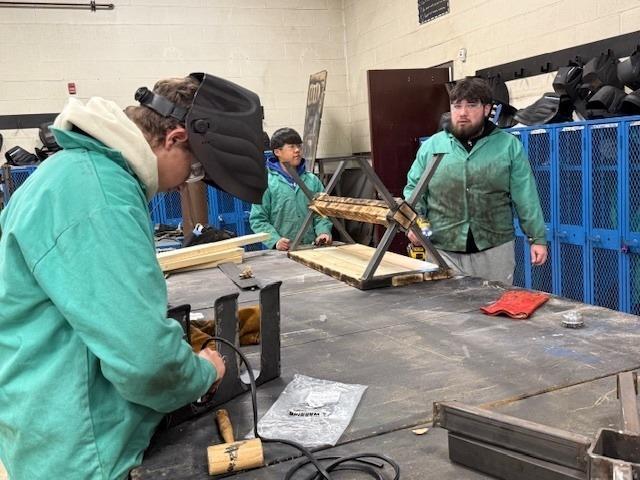
Students in the JCHS Welding program have been hard at work completing their individual projects, demonstrating the skills they’ve learned after successful “test welds” across four core methodologies: Gas Welding, Brazing, Arc Welding (stick), and MIG Welding (Gas Metal Arc Welding).
In addition to these individual projects, JCHS Welding Teacher Allen Snyder said students regularly participate in “diverse practical shop work, including trailer repairs and various small-scale projects brought into the facility throughout the year.”
Welding students also take part in impactful community projects, such as the design and fabrication of a 25-foot Christmas tree which is prominently displayed in downtown Jerseyville in the City Center Plaza near Germania Brew Haus.

Dual College Credit, Other Benefits Offered
The Welding and Electricity programs at JCHS both offer dual college credit opportunities in partnership with LCCC, which Spainhoward and Snyder say allow students to save time getting started on their careers while lowering their tuition costs.
“This unique setup means students can earn valuable college credit while still in high school,” Spainhoward said, citing the two dual credit opportunities the program offers. “This is a powerful opportunity to save significant money and time on their future career path, allowing them to potentially enter the workforce sooner and with less debt."
Snyder said Welding students have the chance to earn three dual credit hours through LCCC, which allows them to fulfill the requirements for the college’s foundational welding course while still enrolled at JCHS. Students who successfully complete these requirements can then bypass the basic welding class at LCCC, saving time on their academic schedule and money on tuition.
Both Snyder spoke highly of their respective programs’ ability to prepare students to meet today’s rising demand for skilled welders and electrical workers.
“There is currently significant demand for skilled tradespeople, specifically in the welding industry,” Snyder said. “Our program effectively addresses this need by providing students with hands-on experiences and opportunities to develop essential, industry-applicable skills.”
Noting students’ practical welding knowledge will grow further with field experience, Snyder added: “We are confident that graduates leave our program with a comprehensive understanding of welding safety protocols and the proper use of relevant tools and equipment.”