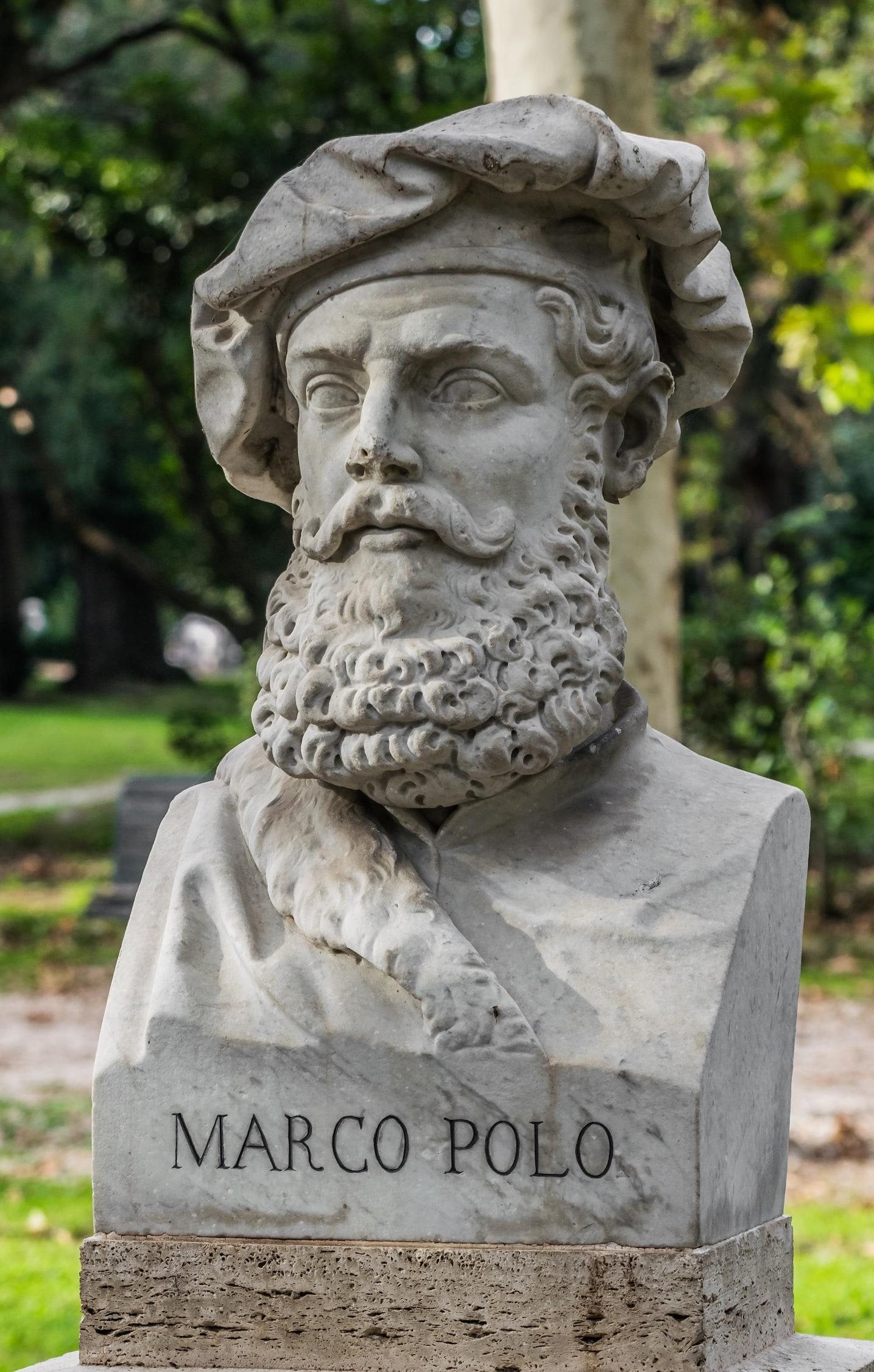
September 15, 1254 saw the birth of Marco Polo in Venice, according to the traditional date often associated with him. Although some details of his early life remain uncertain, Polo became one of the best-known travelers of the medieval world. His journeys across Asia and his later accounts of the court of Kublai Khan helped expand European awareness of lands far beyond the Mediterranean. While parts of his story have long been debated, the larger importance of his name lies in how it came to represent cross-cultural contact, trade, and curiosity about the wider world.
Get The Latest News!
Don't miss our top stories and need-to-know news everyday in your inbox.
Another major turning point came in 1821, when several Central American provinces declared independence from Spain. The move involved territories that today include Guatemala, El Salvador, Honduras, Nicaragua, and Costa Rica. Their decision was shaped by broader changes across Latin America, where colonial rule was weakening after years of political unrest, economic strain, and independence movements inspired by events in Europe and the Americas. Independence did not solve every problem at once, and the region went through further political change in the years that followed. Even so, September 15 remains a national day of independence across much of Central America and marks an important step in the end of Spanish colonial rule.
The modern industrial age also left its mark on this date. In 1830, the Liverpool and Manchester Railway formally opened in England. This was one of the world’s first intercity railways to rely mainly on steam locomotives and to provide regular passenger as well as freight service. Railways had existed before, but this line demonstrated on a new scale how faster land transport could reshape business, travel, and daily life. Goods could move more quickly, cities became more connected, and industrial economies gained a powerful new tool. The success of the railway encouraged similar projects around the world, making September 15 a meaningful date in the history of transportation.
Political and military history intersected again in 1916 during the First World War, when tanks were used in combat for the first time at the Battle of the Somme. The early machines were slow, mechanically unreliable, and limited in number, yet their appearance signaled a major change in warfare. Armies on the Western Front had been trapped in trench systems defended by machine guns and artillery. Military planners hoped armored vehicles could help break that deadlock. The first use of tanks did not produce a quick solution, but it introduced a technology that would become central to twentieth-century war.
A very different kind of breakthrough came in 1971, when the environmental group Greenpeace emerged from an anti-nuclear protest voyage launched from Canada. The early campaign focused on opposition to nuclear testing near Alaska. Although the organization developed over time and later became active on many environmental issues, its roots on this date reflected a broader shift in public activism. Citizens in several countries were becoming more organized in campaigns about pollution, war, nuclear risk, and conservation. The rise of such movements helped place environmental protection more firmly into public debate around the world.
Culture and media were transformed on September 15, 1982, when the first issue of USA Today was published. Its bright graphics, short articles, and accessible layout stood out from many traditional newspapers of the time. Some critics initially saw the format as too simplified, but the paper had a major influence on journalism and newspaper design. It reflected changing reader habits in an age of fast-moving television news and helped show how print media could adapt to a more visual, national audience.
Sports history brought another milestone in 2000 at the Sydney Olympic Games, where Cathy Freeman of Australia lit the Olympic cauldron at the opening ceremony. As an Aboriginal athlete and one of the country’s most recognized sports figures, Freeman’s role carried deep national significance. It was widely seen as a moment that acknowledged both athletic excellence and the place of Indigenous people in Australia’s public life. Later in those Games, she won the 400 meters, adding to the meaning of her appearance on opening night.
September 15 has also produced notable births across many fields. Agatha Christie, born in 1890, became one of the world’s most widely read authors. Her detective novels and plays, including stories featuring Hercule Poirot and Miss Marple, shaped modern crime fiction and continue to influence writers, television, and film. The same date in 1926 brought the birth of Jean-Pierre Serre, the French mathematician whose work helped connect algebra, geometry, and number theory. His contributions made him one of the most respected mathematicians of the modern era.
Prince Harry, Duke of Sussex, was born on September 15, 1984. As a member of the British royal family, he has been widely followed in public life and has drawn attention to military service, veterans’ issues, and charitable work.
Taken together, the events of September 15 show how a single date can hold moments of war and independence, invention and exploration, protest and performance.