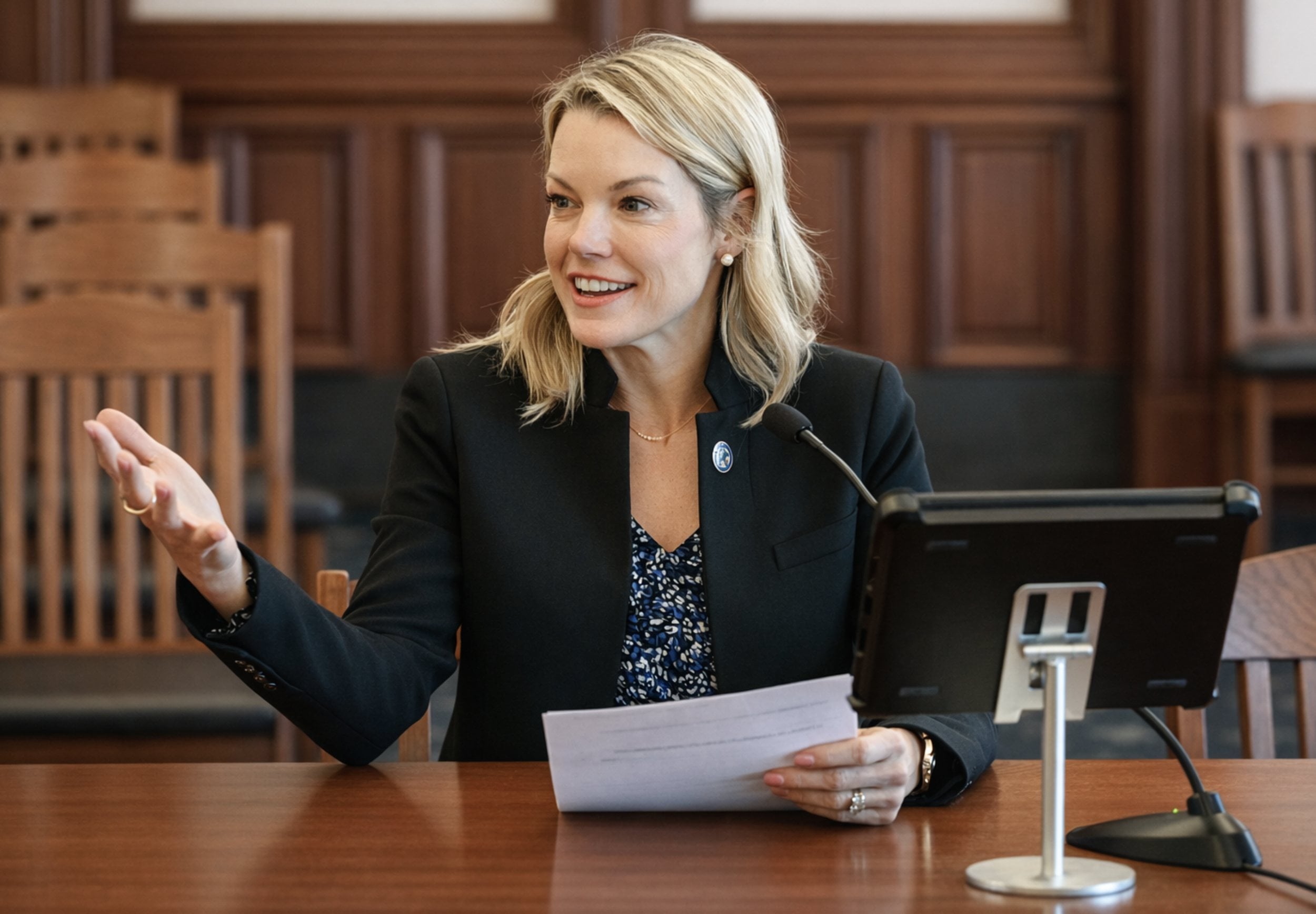


ALTON - The Wedge hosted its monthly Community Collaboration Lab to engage community members in conversations about public safety data.
Get The Latest News!
Don't miss our top stories and need-to-know news everyday in your inbox.
On Aug. 13, 2025, community members came together for a free workshop at The Wedge titled “Making Public Safety Data Work for Communities.” Led by Dr. Dennis Mares, Professor of Criminal Justice Studies and Director of the Center for Crime Science and Violence Prevention at Southern Illinois University Edwardsville, the conversation centered on how to access and utilize public safety data.
“We’re trying to unlock the potential of the data,” Mares said. “How does it help a community to figure out what problems a community has, and what can we do to make those problems less?”
Mares explained that public safety data includes computer-assisted dispatch data, or the data that comes from 911 calls, and records management system data, or crime data. His organization is working with local police departments to create a “consistent” system for logging data.
He noted that this data is generally stored on police servers of proprietary vendor applications, and the vendors have “little incentive” to make that data accessible to the public.
“Really, the vendors are trying to make more money out of you,” he said. “I think there are people working on better solutions that are more web-based and should be more accessible.”
Mares wants to make public safety data more accessible to both police departments and the public. His team works with police departments to create maps and systems that show where crime happens in a municipality.
He noted that “we have to think about ethics” when creating these programs. For example, Mares does not put sex-based crimes on maps that are accessible to the public. For police departments, he uses exact addresses, but he often randomizes the locations so specific addresses are not marked on maps made for public consumption.
“We want to make sure that we don’t make bigger problems for people than what we started out with,” he explained. “We don’t want to revictimize victims.”
Mares noted that business owners and grant writers benefit from studying public safety data. He believes there are “a variety of reasons" why data should be available to the public, but the Center for Crime Science and Violence Prevention is also focused on making this data more available to the police departments, as well.
The Center for Crime Science and Violence Prevention plans to produce a website for the Illinois State Police that will be easier for the public to navigate. Mares said the organization does “fun stuff with data,” but the ultimate goal is to help communities understand and prevent crime.
“We’ve got to get folks to look at the data and use the resources where they need them the most,” he added. “If you don’t look at your data, oftentimes you end up not really doing much with your data and not changing your processes.”
The Wedge hosts monthly Community Collaboration Labs in downtown Alton that are free and open to the public. For more information about The Wedge and their programs and events, visit their official website at TheWedgeAlton.com.