On January 15, 2001, Wikipedia went live and invited anyone with an internet connection to help build an encyclopedia. At the time, the idea sounded risky: opening reference writing to the public seemed like a recipe for mistakes and vandalism. Yet the project quickly showed a new model for sharing knowledge—one that relied on transparency, community rules, and constant revision rather than a small group of gatekeepers. It mattered then because it lowered the cost of learning and publishing on a global scale. It still matters today because it changed how people look up basic facts, how classrooms and newsrooms check information, and how societies argue about what counts as reliable knowledge in a digital world.
Get The Latest News!
Don't miss our top stories and need-to-know news everyday in your inbox.
The story of January 15 stretches far beyond the internet era. In 1559, England’s Queen Elizabeth I was crowned at Westminster Abbey, a moment that helped steady a country shaken by rapid religious and political change. Her reign would become linked to the consolidation of royal authority, a stronger sense of national identity, and the growth of English sea power. The coronation itself did not create those outcomes overnight, but it marked a turning point: it signaled continuity after years of uncertainty and set the stage for policies that shaped England’s role in Europe and overseas for generations.
More than two centuries later, on January 15, 1759, the British Museum opened to the public in London. Unlike private collections reserved for elites, this institution was designed as a public resource, built around the idea that preserved objects and documents could educate anyone who sought them out. That principle—making shared heritage accessible—became influential as museums spread and expanded around the world. The British Museum’s opening also reflected an age when collecting, cataloging, and classifying were central to how many Europeans tried to understand history and the wider world, for better and for worse.
In 1777, during the American Revolutionary War, the Continental Congress approved a design for what became the Stars and Stripes. Flags do not win battles, but they can unify people, especially in conflicts where legitimacy and identity are contested. The adoption of a national flag helped the revolutionaries present themselves as a collective cause rather than a loose set of colonies. Over time, the flag became a symbol used in many ways—patriotic, ceremonial, and sometimes disputed—showing how simple designs can carry complicated meanings across centuries.
In the twentieth century, January 15 is strongly associated with a different kind of turning point. In 1919, Rosa Luxemburg and Karl Liebknecht, prominent socialist leaders in Germany, were killed after the failed Spartacist uprising in Berlin. Their deaths became lasting reference points in debates over revolution, reform, and the future of the left in Europe. The immediate context was a Germany struggling to rebuild after World War I, facing hunger, political violence, and competing visions for what the post-imperial state should become. The long-term significance lies in how the episode foreshadowed the instability of the Weimar years and left deep scars in German political life.
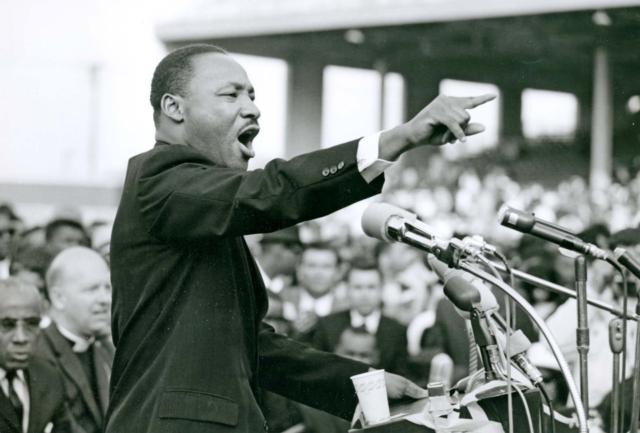
The date is also tied to the struggle for civil rights in the United States. Martin Luther King Jr. was born on January 15, 1929, and his birthday later became a federal holiday observed in January. While the holiday itself is not fixed to the 15th every year, the birth date anchors a wider commemoration of nonviolent protest, voting rights, and equal treatment under law. King’s influence extended beyond the campaigns he led; his speeches and organizing helped set standards for mass movements and for how many people think about justice through civic action.
Science and technology have their own January 15 milestones. In 1936, the first building designed specifically for television broadcasting opened in London for the BBC at Alexandra Palace, as regular high-definition (for its time) television service began. Early television reached only a small audience, but it previewed a communications revolution. Over the following decades, TV reshaped politics, advertising, and entertainment by bringing shared images into living rooms. It also raised new questions about media power and how visual storytelling affects public opinion.
A cultural landmark arrived in 1943 with the opening of the Pentagon, the headquarters of the United States Department of Defense. Built during World War II, the enormous office complex reflected the scale of modern warfare and the administrative demands of a global military effort. The Pentagon later became a symbol of defense planning during the Cold War and beyond. Even for readers outside the United States, its construction points to a broader twentieth-century trend: governments building permanent, large institutions to manage security, technology, and international commitments.
In 1967, the first Super Bowl was played in Los Angeles, bringing together champions from two professional American football leagues that were moving toward a merger. The game’s early years were not the cultural juggernaut it is now, but the event grew into a major sports and media spectacle. Its long-term importance is less about the score of that first matchup and more about what it revealed: sports could become a national ritual, fueled by television, advertising, and shared viewing experiences.
The modern era’s signature January 15 event returned in 2001 with Wikipedia’s launch. Its growth demonstrated the power of networked collaboration, but it also highlighted the need for clear sourcing and careful editing. Over time, Wikipedia influenced other open projects and pushed traditional publishers to adapt. For students, it became a starting point rather than an endpoint; for researchers and institutions, it became a public-facing battleground over accuracy, neutrality, and representation. The platform’s core idea—that knowledge can be continuously improved by a broad community—remains one of the most influential experiments of the internet age.
Notable births on January 15 reflect a wide range of human achievement. 1987 saw the birth of Skrillex (Sonny Moore) in the United States, a producer and performer who played a major role in bringing certain styles of electronic dance music into the mainstream and shaping how digital-era music is produced and marketed.
Notable deaths on January 15 include figures whose work left enduring marks. One widely documented January 15 death is 2006, when Jaber Al-Ahmad Al-Sabah, the Emir of Kuwait, died after leading the country through major regional crises, including the Iraqi invasion of 1990 and the rebuilding that followed. His long tenure made him a central figure in Kuwait’s modern political history and in Gulf diplomacy.
Seen together, January 15 shows how change can arrive through many channels.