
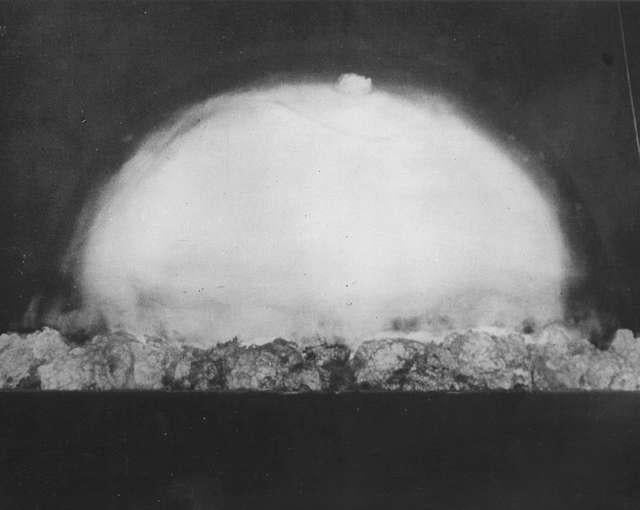
July 16 stands out in history as a day marked by groundbreaking achievements, pivotal moments in global politics, and cultural milestones that have shaped the world as we know it.
Get The Latest News!
Don't miss our top stories and need-to-know news everyday in your inbox.
1945: The Dawn of the Atomic Age – Trinity Test
Arguably the most impactful event on July 16 is the first-ever detonation of a nuclear weapon, known as the Trinity Test. Conducted by the United States in the New Mexico desert, this test marked the beginning of the atomic age. The explosion unleashed an unprecedented amount of energy and ushered in a new era of both scientific possibility and geopolitical tension. This event laid the groundwork for the subsequent bombings of Hiroshima and Nagasaki and the complex global nuclear landscape that continues to influence international relations today.
622: The Hijra – The Migration of Prophet Muhammad
On this day in 622 CE, the Prophet Muhammad embarked on the Hijra, his migration from Mecca to Medina. This journey is a cornerstone of Islamic history and marks the beginning of the Islamic calendar. The Hijra represents not only a physical relocation but also a pivotal moment in the establishment of the Muslim community and the spread of Islam. It set the stage for profound religious, cultural, and political developments that have shaped societies worldwide.
1054: The East-West Schism
July 16, 1054, is remembered for the formal split between the Western Roman Catholic Church and the Eastern Orthodox Church, a division known as the East-West Schism. This event had profound religious and political ramifications, solidifying differing theological and liturgical traditions that persist to this day. The schism influenced the religious landscape of Europe and the broader Christian world, impacting cultural identities and geopolitical alliances for centuries.
1969: Apollo 11 Mission Launch
Another monumental event on July 16 was the launch of Apollo 11 in 1969, when NASA sent astronauts Neil Armstrong, Buzz Aldrin, and Michael Collins on a historic journey to the Moon. This mission exemplified human curiosity and technological prowess, culminating in the first-ever human footsteps on the lunar surface on July 20. The Apollo 11 launch was a defining moment in space exploration and a source of inspiration worldwide, symbolizing what can be achieved through collaboration and innovation.
1999: Mars Climate Orbiter Lost
July 16 also witnessed a significant setback in space exploration when NASA's Mars Climate Orbiter was lost due to a navigation error caused by a metric-imperial unit mix-up. Though a failure, this event served as a critical lesson in engineering and project management, emphasizing the importance of precision and communication in complex scientific endeavors. The incident influenced future missions and contributed to the development of more rigorous protocols.
In Summary
July 16 encapsulates a spectrum of human experience.


