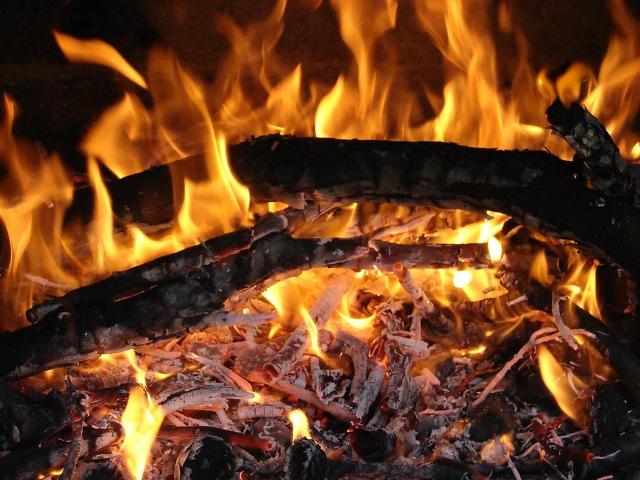
Stare into a fireplace for five minutes and you’ll notice something odd: your brain acts like it has a “mute” button. The to-do list gets quieter. Your shoulders drop. Even people who say they “can’t relax” often find themselves watching the flames like it’s the most important show in the world.
Get The Latest News!
Don't miss our top stories and need-to-know news everyday in your inbox.
That pull isn’t just nostalgia or decoration. Firelight taps into deep parts of human attention, emotion, and social life. It also fits neatly into modern routines, from open-plan living rooms to YouTube “fireplace” videos played on a laptop. Here’s why humans are drawn to fireplaces and firelight—and how to spot the effect in your own day.
Firelight is “soft fascination” for the brain
A fire is busy, but it doesn’t demand anything from you. Flames move constantly, yet the pattern is gentle and predictable. This kind of stimulus is sometimes called “soft fascination”: it holds your attention without forcing you to make decisions.
Compare it to your phone. A phone pulls you in with alerts, messages, and endless choices. Firelight pulls you in with motion and color, but it doesn’t ask you to reply, scroll, or judge. That matters because much of modern stress comes from “directed attention”—the effort of staying focused, filtering distractions, and making small decisions all day.
A fireplace gives your mind a place to rest while still having something to look at. It’s like giving your attention a comfortable chair.
Try noticing it: The next time you’re near a fire, see how often you blink, how your breathing changes, and whether you stop fidgeting. Many people shift into a slower rhythm without meaning to.
We’re tuned to fire because it once meant safety
Fire did not just make life nicer. It made life possible. It provided warmth, light, and a way to cook food. It also kept many predators at a distance. For early humans, a controlled fire was a signal: “This place is protected.”
That old association can still show up in the body. A lit hearth can feel like a boundary between “inside” and “outside,” between shelter and uncertainty. Even in a modern house with central heating and electric lights, a fireplace can create a strong sense of refuge.
This may help explain why people often gather near a fire at parties. The room can be large, but the social center forms around the hearth. It’s not only about heat. It’s about the feeling of a safe, shared zone.
A common misunderstanding: Some people assume the attraction is purely sentimental—something you learn from family traditions. Culture plays a role, but the comfort response also makes sense as a built-in bias toward cues of shelter and security.
Firelight changes how we feel—literally
Firelight is dim, warm, and flickering. Those qualities affect mood.
- Warm color tones (yellow, orange, red) tend to feel cozy and calming compared with harsh, cool lighting. Many people try to recreate this with “warm white” bulbs and lampshades, but real flames have a depth that electric light struggles to copy.
- Flicker adds life without being overwhelming. It creates movement in the corners of your vision, which can keep you engaged without making you tense.
- Lower light encourages slower behavior. Bright light signals “work mode” to many people. Softer light makes it easier to shift into rest, conversation, or reflection.
There’s also an emotional piece: fire feels “alive.” It responds to the room—drafts, new logs, a poke of the poker. That responsiveness can make it feel companionable, like a small presence rather than a static object.
Real-world example: Think about restaurants that use candles or open flames. They’re not doing it for brightness. They’re shaping the pace and mood of the space.
The hearth is a social magnet
A fireplace is one of the few features in a home that naturally faces people toward each other. Sofas and chairs often angle toward it. The result is a built-in gathering spot that encourages conversation.

Historically, the hearth was where cooking happened and where stories were told. You didn’t just “have a fire.” You organized life around it. That pattern still echoes in how we use living rooms. Even homes with a non-working fireplace often treat it as the visual anchor of the room.
Fire also gives people something to do together without needing constant talk. Watching flames is a shared activity that doesn’t require performance. It can reduce social pressure, which is why some of the best conversations happen when you’re looking at a campfire instead of directly at each other.
Look for it: Notice how quickly silence becomes comfortable near a fire. The crackle fills the gap. The flame gives your eyes a place to land.
Cultural traditions keep the meaning alive
Fire carries symbolic weight in many cultures, and those meanings reinforce the attraction.
- “Hearth and home” ties fire to belonging and family life. The phrase isn’t about architecture; it’s about a center of warmth and care.
- “Keeping the home fires burning” means maintaining hope, stability, or commitment during hard times.
- “A flame of hope” or “carrying a torch” links fire with guidance and purpose.
- Many traditions use fire for rituals and remembrance—candles for vigils, lamps for festivals, or ceremonial fires that mark transitions.
Even if you don’t practice these traditions, you’ve absorbed the idea that fire can represent comfort, continuity, and attention. A fireplace can feel meaningful before you can explain why.
A useful distinction: Fire can symbolize both comfort and danger. That tension is part of its power. A controlled fire feels like mastery over something that could get out of hand.
Fire is a safe kind of risk
Part of the draw is that fire is not fully predictable. Flames shift. Logs pop. The sound changes. There’s a mild edge to it—enough to be interesting, not enough to be threatening when managed well.
Humans often enjoy controlled risk. It’s why people like scary movies, roller coasters, or storms viewed from a safe porch. A fireplace offers a similar feeling: you’re close to a primal force, but you’re protected by glass doors, a hearth, and social rules.
That mix of danger and safety can create a sense of awe. It wakes up your attention just enough to feel present.
Practical takeaway: If you’re bored but restless, firelight can be a better reset than more stimulation. It’s engaging without being draining.
Why “digital fireplaces” work (and why they don’t)
It’s telling that millions of people play fireplace videos or use electric fireplaces. Even a screen version can calm you down. The visual flicker and warm tones still trigger some of the same responses.
But many people notice it’s not quite the same. Real fires add:
- Sound (crackling, popping)
- Smell (wood smoke, resin, the room warming)
- Heat (a physical cue of comfort)
- Interaction (adding a log, adjusting airflow)
These extra layers make the experience more immersive. Still, if you live in an apartment or can’t have a real fireplace, a video plus warm lighting and a blanket can capture part of the effect.
Try this at home: Dim overhead lights, use a warm lamp, and play a fireplace video at low volume while you read. See if your body settles faster than it does under bright lights.
How to recognize the “fireplace effect” in your own life
You don’t need a cabin or a wood-burning hearth to notice how firelight changes you. Watch for these signs:
- You speak more slowly and pause more often.
- You feel less urge to check your phone.
- Silence feels comfortable instead of awkward.
- You become more reflective, or you tell longer stories.
- You feel a stronger sense of “here is good enough.”
If you want to use the effect on purpose, treat firelight as a tool:
- Use it as a transition ritual after work: ten minutes by the fire before you do anything else.
- Make it a conversation cue: phones away while the fire is lit.
- Pair it with low-effort comfort: tea, a book, simple music.
A fireplace doesn’t solve problems, but it can change the mental setting in which you face them.
Firelight holds a rare balance: it’s soothing but never dull, ancient but still useful, personal but easy to share. When we gather around it, we’re not only chasing warmth. We’re stepping into a kind of attention that modern life doesn’t offer very often—steady, unhurried, and quietly human.